

An atmosphere of building tension. Visible is the frosty air emanating from my rivals as they perform the "starting line" wiggle on the beginning point.
A swift flick of the hips.
I'm lined up for my local 5km community parkrun and I mean business. It's almost time...
Hold on. I must adjust my tracker. So does the person beside me.
The person behind us tuts. I won't start until… there! Signal acquired, and I'm running.
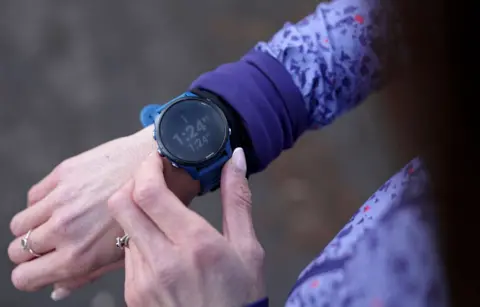
During the scramble, it's hard to spot a wrist without a smartwatch on it. And this extends beyond us athletes who rely on them.
We're witnessing a booming, multi-billion dollar sector. Brands like Apple Watch are prevalent, featuring an broad range of diverse devices to suit a spectrum of lifestyles. Based on how feature-packed the watch you go for, prices can vary between a hundred pounds to thousands of pounds.
"It makes me crazy, it's impossible to relax."
"It comforts me… It acts as a friend supporting me."
"Stop telling me about a bad night's sleep."
A small sample of the reactions I've received from like-minded smartwatch wearers when I inquire what they feel about theirs.
The Monitoring Conundrum
My thoughts on mine? At this moment, frustrating. It's telling me my speed is wrong, causing me to question whether the trees I'm passing under are interfering with my GPS connection.
Countless individuals of us fasten these compact devices onto our arms and wear them 24/7, ostensibly comfortable with the fact they're continuously recording us.
Gone are the days when we used them exclusively to give us an rough count of our step count. Now, they can analyse our nightly rest, stress levels, heart rate variability (HRV), our body battery.
It's tricky to find a health indicator they fail to monitor.
But do they do what they say they do? And are the statistics we analyse a accurate representation of our actual health? Do they improve our daily wellness, or do the multitude of readings and cheerleading alerts just contribute to our everyday anxiety?

A Complicated Bond
"I become a bit fixated with mine," a wearer confesses.
While she values how her device tracks her exercise, she finds some of its other capabilities "excessive" at times - a feeling initially realised during a significant period.
Until she found out she could change its configuration, her smartwatch repeatedly informed her she was being insufficiently productive enough. Now, the watch insists her she's had a poor sleep score.
"I've got a infant, there's no point to be told I'm tired," she says. "That fact is perfectly well."
Couldn't she just stop wearing it?
"I suppose I could, I suppose, but I'm in this complicated dynamic with it," she explains. "I appreciate it for its exercise data, I just wonder whether all the other things it can now do is perhaps overkill for me."
Inside the Device
Different brands of smartwatch has its own unique way of measuring your bodily functions and processing your data, but the most use sensors on the underside of the watch.
They commonly project tiny, coloured LED lights onto your wrist which can observe blood flow, detecting your heartbeat. More advanced devices analyse changes in the electrical current that passes over the skin to get an idea of your nervous system activity.
The Professional Viewpoint
One expert says that in general for smartwatches, it's a "fine balance" - while the rapidly advancing tech could actually save lives, "detecting disease before we feel unwell", it could also turn us device users into the "anxious healthy".
He points out that the most advanced wearables can carry out tests like medical-grade monitoring, which constantly monitor how healthy the heart is. They can alert if someone is experiencing an irregular rhythm, where there is erratic signals in the heart causing an uneven pulse.
This does not mean someone is on the verge of a heart attack, but it can give an preliminary indication they might be more vulnerable of a heart problem in the long term.
But how to interpret these numbers is complicated. The expert concerns that as additional features are introduced, people may not be able to fully contextualise their data.
"I have some doubts that the ability to monitor so much data is such a positive development," he says.
A health researcher studying cardiology echoes this sentiment. A study into the impact of wearable tech on a cohort of individuals with health issues suggested a significant portion of those who were given devices to monitor their cardiac function experienced heightened worry and were "had a higher tendency to use healthcare resources".
She noted a pattern with her patients - they saw a worrying figure on their watch. They became worried. Their pulse rose. They got even more concerned. They checked again, and their reading rose further.
"Upon viewing numbers about ourselves that we lack context for then, of course, we are going to become concerned," the psychologist says. "We look, we obsess - it becomes a feedback loop."


